We'll help you find the beer tap that suits you.
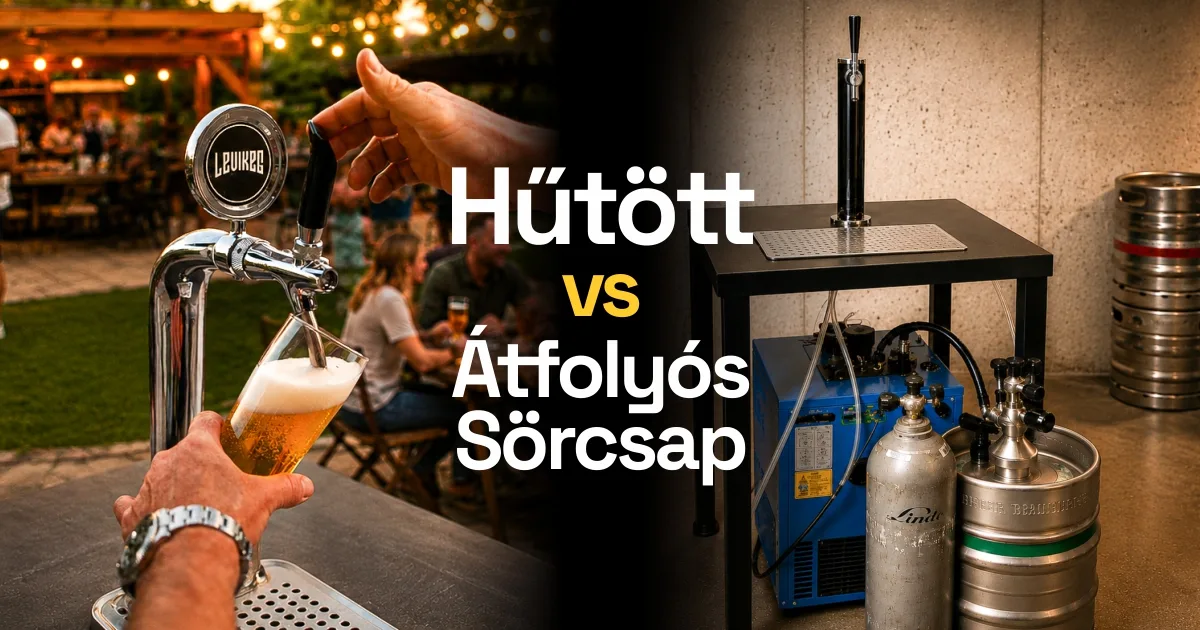
Chilled vs flow-through beer tap: what's the difference, and which one is right for you?
Have you long been toying with the idea that you'd like real draught beer at home too? You're not alone. The world of home beer taps has come a long way in recent years – these days you don't need to find a pub to unwind with a perfect, cold glass with a proper head. But as soon as you start looking into the options, you're faced with a fundamental question: a chilled, closed-system beer tap or a flow-through one?
If you have no idea what the difference is – don't worry. In this article we'll walk you through both solutions clearly and without waffle, so you can decide for yourself which one best suits your home and your lifestyle.
What is a flow-through beer tap?
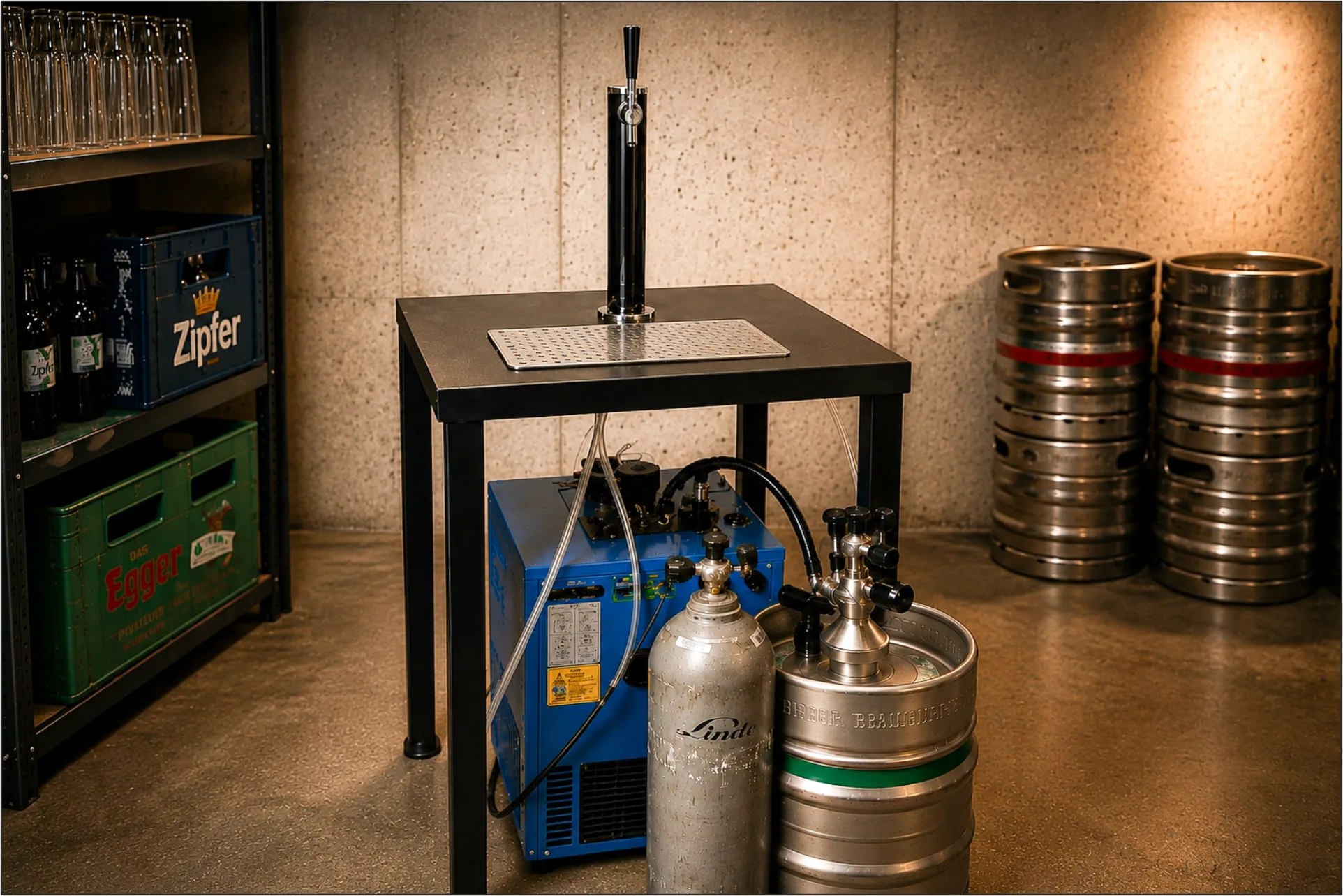
A flow-through (also called inline) beer tap is the simpler, more traditional solution. The name says it all: the beer reaches the tap by flowing through a chilled medium.
How does it work in practice?
The keg sits next to the cooler, through which the beer flows via a coolant and reaches the ideal temperature, alongside an industrial CO₂ cylinder whose gas pressure pushes the beer through the lines – and when you open the tap, the beer flows. It's a simple, proven technology – and for a long time it was the only option for home use.
What are the advantages?
- Usually a lower entry price
- Depending on its capacity, it can generally dispense an unlimited number of kegs
What are the disadvantages?
- The system has to be maintained (cleaned, rinsed) by hand, as a separate step
- The beer has a more limited shelf life – once the keg is tapped it needs to be finished within 7–10 days
- It needs an industrial CO₂ cylinder, which is hard to come by
- Fully manual operation – you need to understand exactly how to set the beer's temperature and carbonation
A flow-through beer tap is perfect for users who get through a large volume of beer in a short time, but if you want a true draught beer experience at home – in every glass, every time – read on. 👇
What is a closed-system beer tap?
A closed-system beer tap is on a whole different level. As the name suggests, here the beer stays in a fully closed, controlled system – from the moment the keg goes in to the last drop.
Nothing comes into contact with outside air, the temperature is controlled all the way to the tap, and the system itself makes sure the beer is always exactly as it was at the brewery.
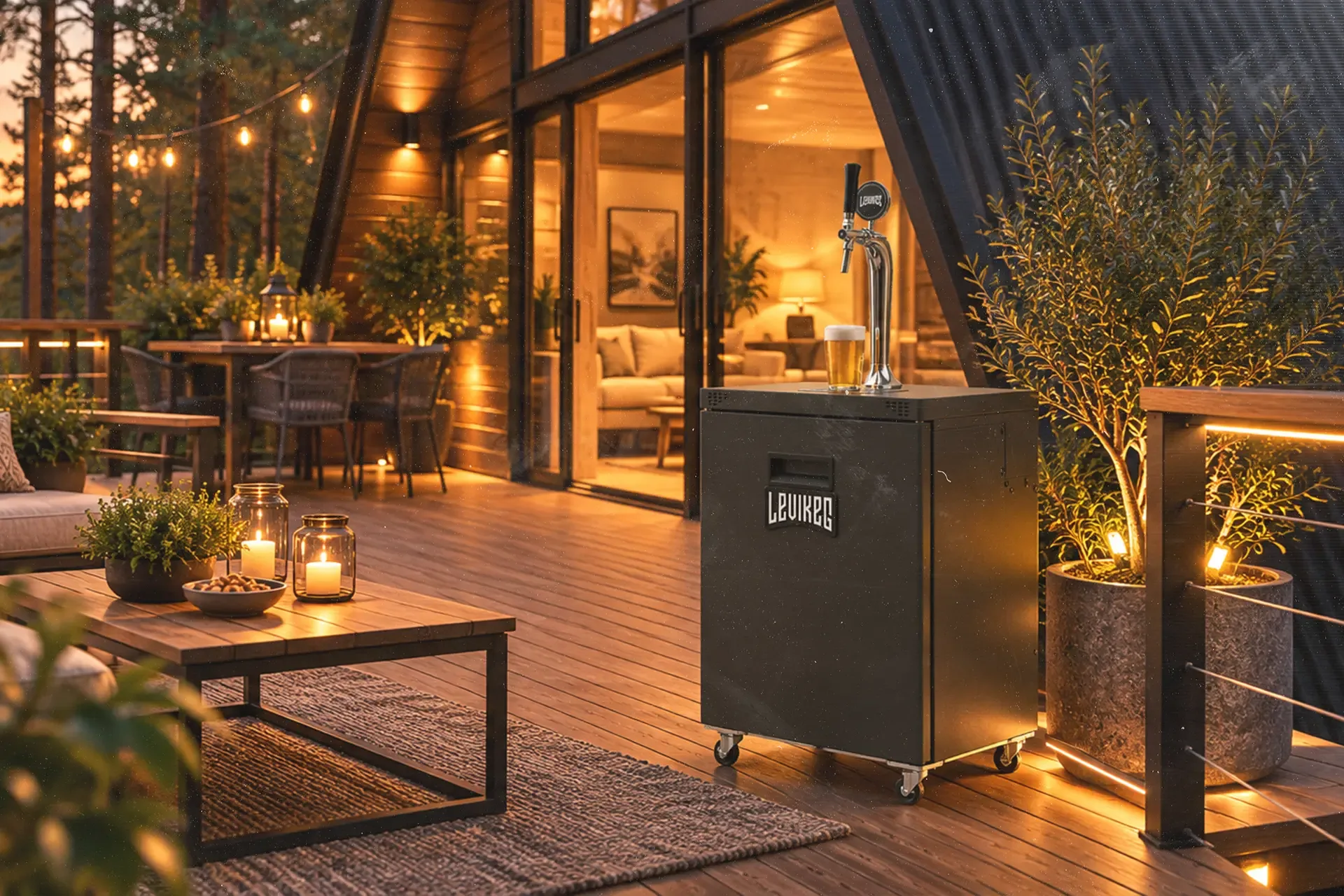
This is the solution Levikeg stands for.
How does the closed system work?
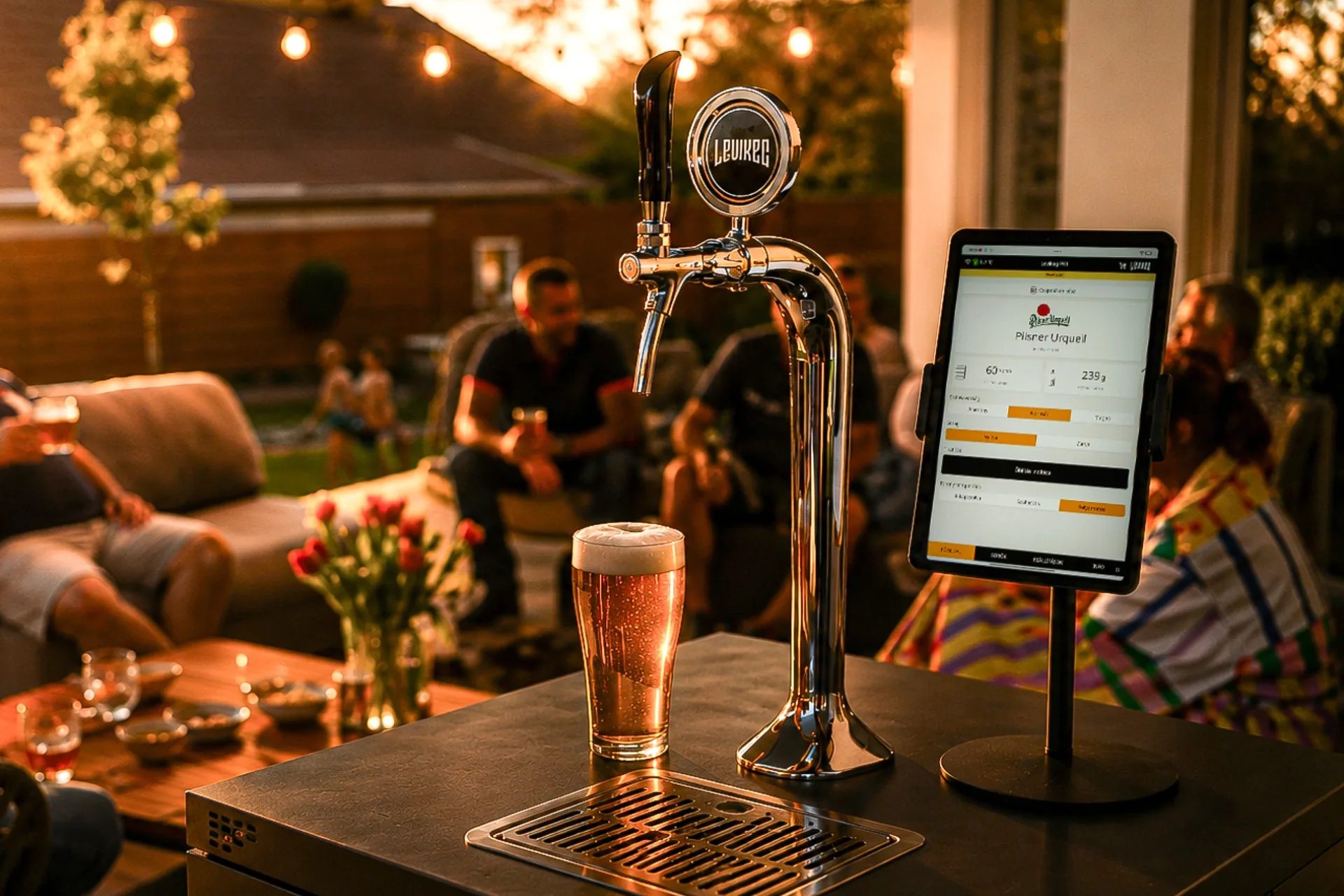
With Levikeg, the keg goes into a chilled, insulated chamber (a fridge). The built-in compressor and the temperature sensors constantly monitor and regulate the temperature – not only around the keg, but in the beer tower too. This means the first and the last glass will be of the same quality and temperature.
The CO₂ system is precisely controlled too: a two-stage regulator and an automatically controlled throttle valve ensure the beer's carbonation is always right – neither flat nor too foamy in the glass.
The two systems compared at a glance
Aspect | Flow-through beer tap | Closed-system beer tap (e.g. Levikeg) |
Cooling method | Flow-through | Constant, active cooling, like a refrigerator |
Beer tower temperature | Usually not chilled | Continuously chilled by a closed loop |
Carbonation | Set manually | Automatically regulated |
Beer shelf life | Shorter (7–10 days) | Longer (4–6 months) – the closed system protects the beer line from contamination |
Cleaning | By a technician, with special tools | Built-in rinsing system, automated |
Smart features | None | App-controlled, real-time data |
Entry price | Lower | Higher, but offers more value |
Who is it for? | High-volume hospitality use | Low to moderate consumption, for those who value quality |
Why does a closed system really matter?
Many people underestimate how sensitive beer is to oxygen, temperature and pressure. If any of these fluctuates, the beer's flavour, aroma and head suffer. That's why closed systems deliver much better results.
With Levikeg, for example:
- The beer tower is continuously chilled too – an internal cooling loop circulates the coolant, so the beer stays cold all the way to the tap, and the first and last sip are exactly the same temperature.
- The system closes off the beer line with a valve when it's not in use – so neither dirt nor air gets to the beer, which guarantees a long shelf life.
- The automatic rinsing system consists of a built-in cleaning tank, a pump system and valves, and rinses the lines at regular intervals – with cleaning fluid, just like a modern coffee machine.
- The amount of CO₂ and beer is monitored in real time via weight and flow sensors, and the app lets you know when your beer is running low.
This isn't just a convenience extra – it means the beer's quality stays consistent to the last sip.
Which one is right for you? – A quick decision guide
You don't have to decide straight away, but the questions below will help you find your way:
Choose a flow-through beer tap if:
- You're looking for a beer tap for high-volume hospitality use
- You don't mind if your beer quality varies
- Technical settings and maintenance aren't a problem for you
Choose a closed-system beer tap (e.g. Levikeg) if:
- You want to enjoy really good draught beer regularly
- It matters to you that every glass is the same – the first and the last
- You value smart, app-controlled solutions and remote monitoring
- You don't want to spend much effort on maintenance
- You're thinking long term and you care about the quality of your beer
- You want a compact beer tap you can even build into your kitchen – or take the version on wheels with you anywhere
- You'd like the app to notify you before the beer runs out – and the Beer Courier to take care of a quick top-up
The lesson from beer tap tests: quality is in the details
If you look at the results of beer tap tests and comparisons, one thing comes up consistently: the quality of your beer experience at home isn't decided by how much you spent on the beer, but by how you store and pour it. Even the best premium beer can taste flat and dull if it's stored at the wrong temperature, at the wrong CO2 level or in the wrong system.
The best home beer tap isn't necessarily the cheapest – it's the one that brings you closest to genuine pub quality, without having to leave your home.
Levikeg was designed for exactly this experience: an intelligent, modern system that automatically takes care of every little detail – from temperature and carbonation to cleaning – so all you have to do is enjoy your beer.
Summary
So the difference between a flow-through and a closed-system beer tap isn't just technical – it's also about the experience. A flow-through system is a simpler, entry-level solution with a number of limitations.
A closed system, on the other hand – like Levikeg – is in a different category altogether: precise temperature control, automated carbonation, built-in cleaning and smart app integration make draught beer a truly convenient, long-term experience at home.
If you're serious about beer culture at home, a closed system is an investment – but one that pays off with every toast.
👉 Take a look at the Levikeg system and decide for yourself which beer tap suits you: levikeg.hu