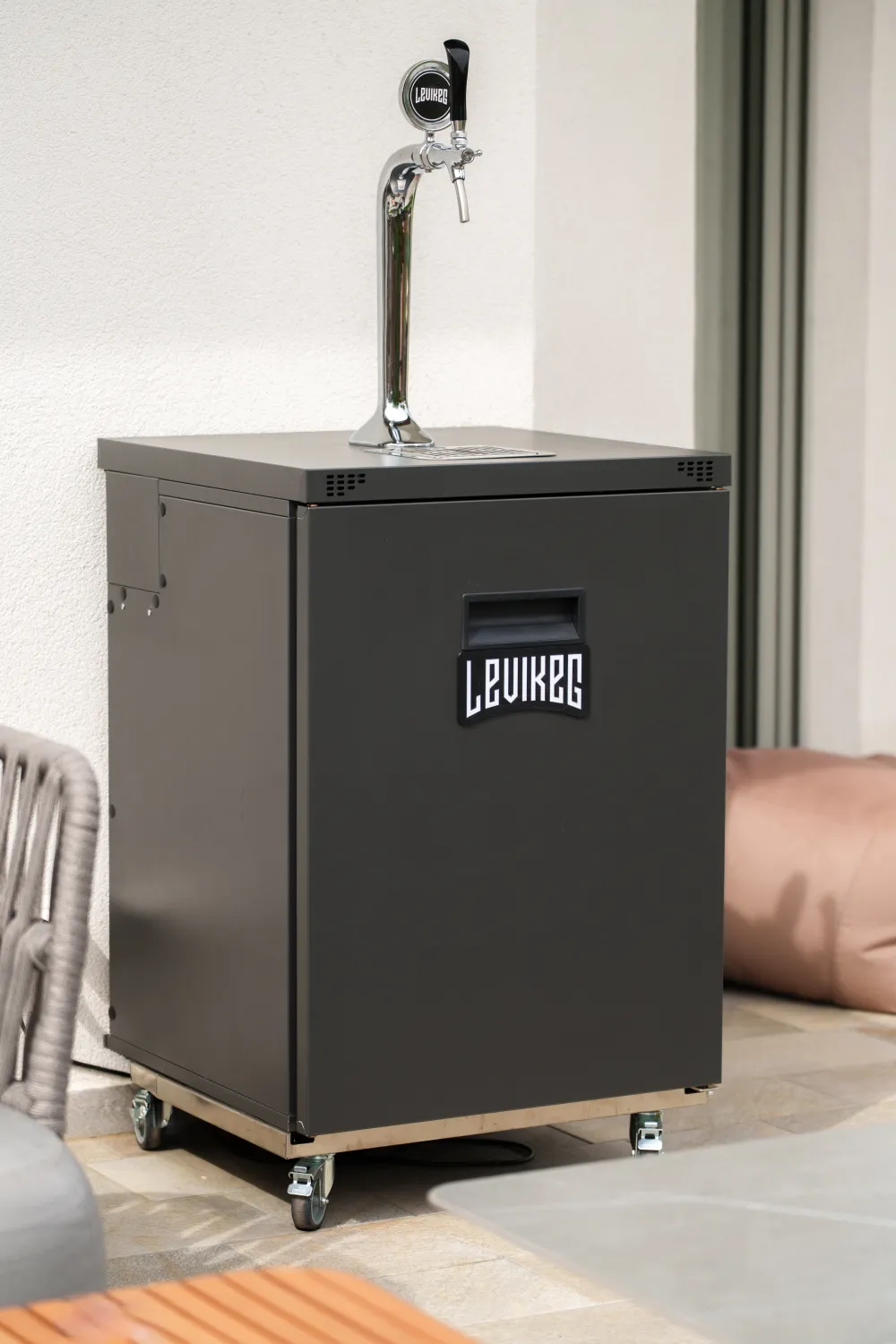
Why is this better than a traditional beer tap?
If by traditional you mean a flow-through system, in short, because it is compact, you have ten times as much time to finish your keg, it is fully automated, and it does not cost much more than a quality flow-through system.
Does it work with any keg?
It accommodates all kegs available on the Hungarian market, whose capacity ranges from 10 to 50 litres; the most common, however, is the 30-litre keg, which you can still move around easily.
How long does it take for the keg to cool down?
It depends on the size of the keg and on the transport/storage/weather conditions; it reaches serving temperature within 2–3 hours of being inserted, so it is worth checking how much is left towards the end of the party, but your Levikeg will let you know anyway when the keg is running low.
How long does a cylinder of CO₂ last?
In my experience, depending on the type, one cylinder is enough for 3 kegs (80–100 litres) of lager. Always keep one in stock; it is not expensive, but it is very annoying if that is exactly what runs out and you have to go on a supply run by taxi. You can also see the CO₂ cylinder level in real time, and it sends a low-level alert, just as it does for the beer.
How often does the system need to be flushed?
The machine calculates this based on the ratio of time and usage and prompts you to carry out the cleaning. It can also be started manually at any time, and it is no more complicated than rinsing a coffee machine. You can also buy the cleaning tablets in the webshop.
Which is better: the freestanding or the under-counter version?
It is worth deciding this based on your options and typical usage. If you want to carry it around, I definitely recommend the mobile Levikeg. If you have a great summer kitchen, it is better to build it in. But once you have had a taste of the Levikeg lifestyle, you will have one in the summer kitchen and take another one with you wherever social life calls for it.